

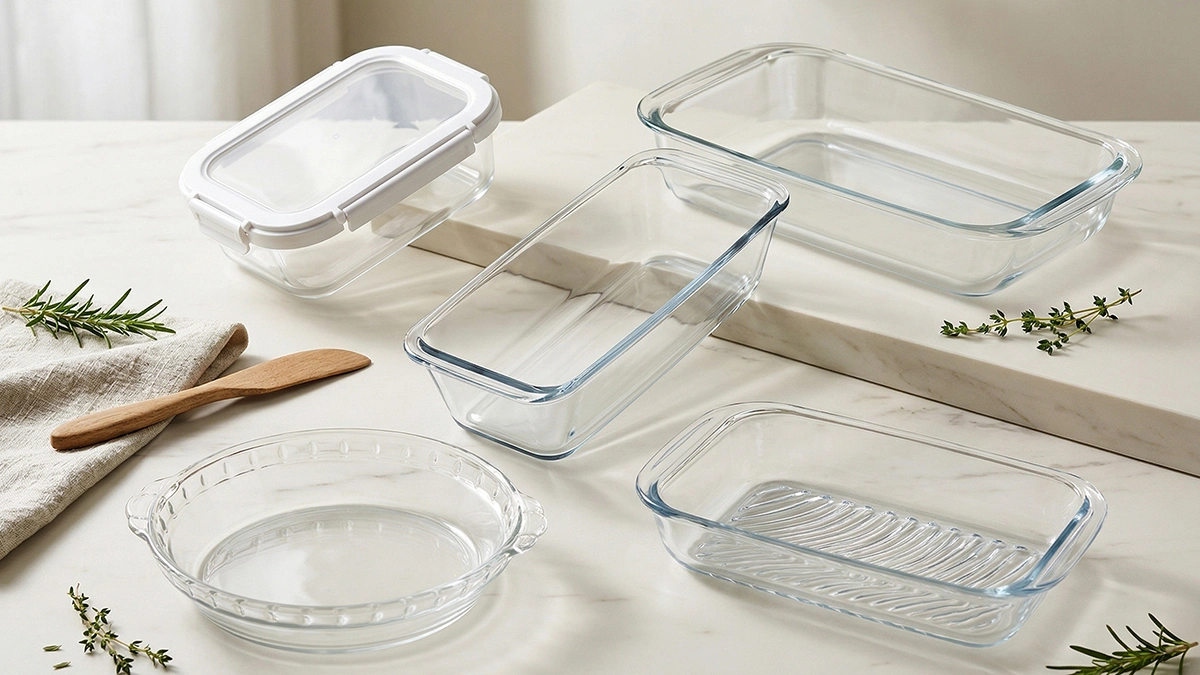

What is borosilicate glass? For those seeking high-performance kitchenware, understanding the properties of this material is essential. SHULOPAL High Borosilicate Glass bakeware and food storage containers provide exceptional thermal endurance and safety for everyday culinary needs.
The Chemical Properties of High Borosilicate Glass
The exceptional properties of our glass are rooted in a high-purity chemical composition. Our specialized 78.32% Silica and 13.58% Boron formulation ensures the glass remains structurally sound across vast thermal gradients—a vital requirement for professional ovenware.
| Chemical Component | Nominal Value | Standard Range | Functional Role |
|---|---|---|---|
| Silica (SiO₂) | 78.32% | 77.0% – 79.5% | Primary structural network; chemical inertness. |
| Boron Trioxide (B₂O₃) | 13.58% | 13.0% – 14.5% | Core driver for Δ 130°C thermal shock resistance. |
| Sodium Oxide (Na₂O) | 4.90% | 4.0% – 5.5% | Flux agent; optimizes clarity and surface smoothness. |
| Alumina + Titania (Al₂O₃+TiO₂) | 2.44% | 2.0% – 3.0% | Enhances mechanical hardness and prevents clouding. |
| Others (Fe₂O₃ + CaO + MgO) | 0.057% | ≤ 0.10% | Trace impurities; maintains glass transparency. |
Extreme Thermal Versatility: From the Freezer to High-Temperature Ovens
A primary benefit of SHULOPAL high borosilicate glass kitchenware is its incredible temperature range. Our products are safe from -40°C (-40°F) to 400°C (752°F), allowing for a seamless transition between extreme environments while remaining completely non-reactive and food-safe.
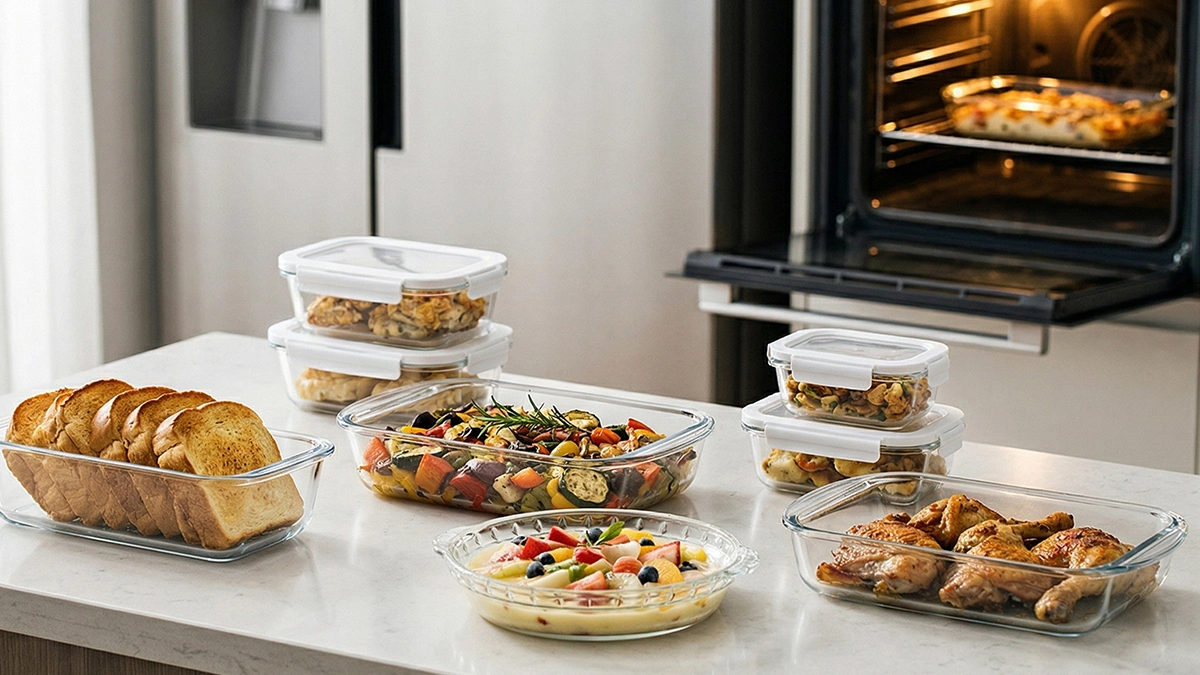
Multi-functional Design: While our borosilicate glass food storage containers are primarily designed for preservation, their high-borosilicate glass composition makes them oven-compatible. This allows you to use them for quick reheating or small-batch baking, transitioning directly from the refrigerator to the oven with confidence.
Borosilicate Glass Thermal Expansion Analysis
Figure: Thermal Expansion Curve (CTE: 35.6×10⁻⁷/°C @ 25-350°C)
The Δ 130°C Safety Standard
For high-end kitchenware, surviving rapid temperature fluctuations is non-negotiable. Our certified Δ 130°C (266°F) thermal shock resistance ensures that SHULOPAL glassware won't shatter when moved from cold storage to intense heat sources.
| No | T1 (Oven) | T2 (Water) | △T (T1-T2) | Tested Samples | Num. of Failures | Cumulative % |
|---|---|---|---|---|---|---|
| 1 | 136 | 15.2 | 120.8 | 20 | 0 | 0% |
| 2 | 147 | 16.7 | 130.3 | 20 | 0 | 0% |
| 3 | 155 | 15.3 | 139.7 | 20 | 4 | 20% |
| 4 | 167 | 16.5 | 150.5 | 16 | 8 | 60% |
| 5 | 176 | 16 | 160 | 8 | 8 | 100% |
- Abrasion: Internal and external sample surfaces are abraded using 150-grit carborundum cloth.
- Preparation: The oven (T1) and water bath (T2) are stabilized for target ΔT (120°C - 160°C).
- Heating: Samples are conditioned at T1 for a minimum of 30 minutes.
- Thermal Shock: Samples transferred to the water bath within 5 seconds.
- Inspection: After drying, check for visible cracks or a "dull" sound when tapped.
Why Choose SHULOPAL High Borosilicate Glass Bakeware & Storage?
Soda-lime glass has low boron content and poor thermal shock resistance. In contrast, SHULOPAL's high-borosilicate glass is engineered to withstand extreme thermal stress, making it the safe choice for professional oven use. This superior heat resistance is achieved through our advanced pressing and high-temperature forming process.
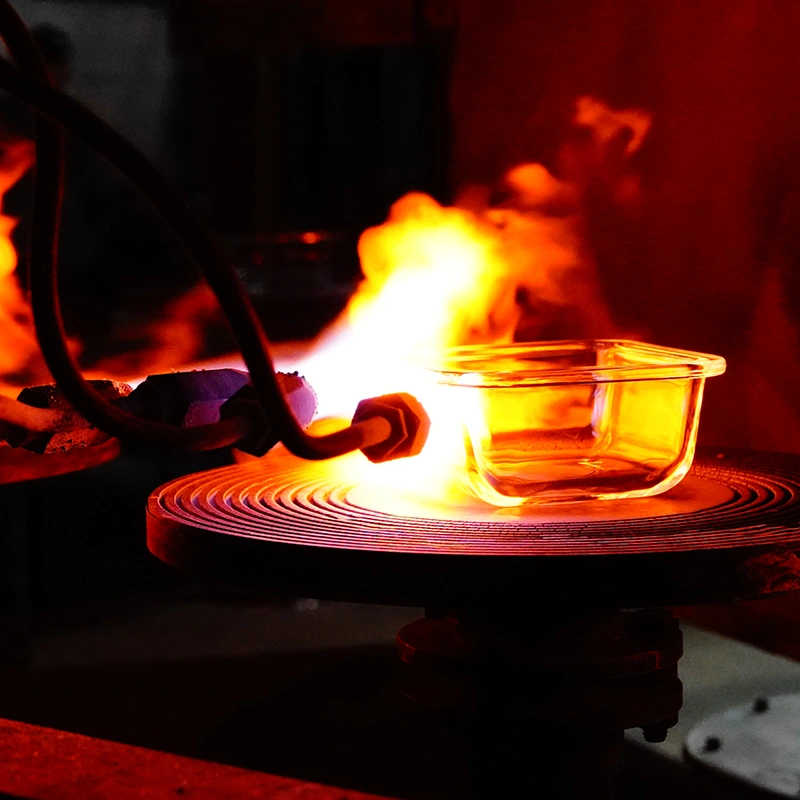
SHULOPAL borosilicate glass manufacturing
- Professional Bakeware: Heavy-duty glassware designed for high-heat roasting.
- Food Storage Containers: Airtight preservation that is also oven-safe for reheating.
- Caring Tip: Allow glass to cool gradually; clean with mild soap and soft sponge.